
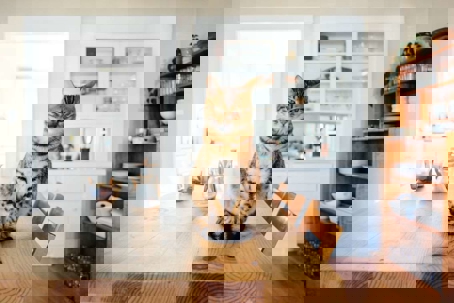
If you’re a cat lover with allergies, you know the struggle is real. Those adorable feline companions bring so much joy—and so many sneezes! When searching for air purifiers for cat allergies, here’s what truly matters:
| Top Considerations | What to Look For |
|---|---|
| Filter Type | True HEPA filter (captures 99.97% of particles down to 0.3 microns) |
| Coverage Area | Match to your room size (150-1000+ sq. ft. options available) |
| Additional Features | Activated carbon filter for odors, washable pre-filter for hair |
| Placement | Bedroom and main living areas where you and your cat spend most time |
| Maintenance | Replace HEPA filters every 6-12 months (more often in multi-cat homes) |
The good news? You don’t have to choose between your furry friend and breathing easily. Air purifiers for cat allergies can dramatically reduce symptoms for many allergy sufferers. Most people don’t realize that cat allergies aren’t actually triggered by fur—it’s a tiny protein called Fel d 1 that’s the real troublemaker. This protein is found in cat saliva, dander, and urine. When your kitty grooms herself (which happens constantly, as any cat owner knows), this protein dries on her fur and becomes airborne, floating throughout your home.
High-quality air purifiers with proper HEPA filtration act like allergy-fighting ninjas, capturing these microscopic allergen particles before they reach your nose and eyes. While I wish I could promise they’ll eliminate 100% of allergens, that wouldn’t be honest—but the right model can make such a noticeable difference that many of our customers report being able to cuddle their cats again without immediately reaching for tissues.
I’m Al Fouz from Abaco Air Experts, and I’ve spent years helping Jacksonville homeowners find effective air purifiers for cat allergies that work seamlessly with their existing HVAC systems. Our goal is comprehensive indoor air quality that lets you and your feline friends live in harmony. Let’s dig into the science of cat allergies and how the right purifier can transform your home environment.
For those interested in the cutting edge, check out our guide to Advanced air purifier technology.
Why cat dander triggers sneezing
Did you know cat allergies affect between 10-20% of Americans? That’s millions of people sneezing their way through cat ownership! The real culprit isn’t actually the beautiful fur you see shedding on your furniture—it’s a microscopic protein called Fel d 1. This protein primarily comes from cats’ sebaceous glands and their saliva. Every time your kitty grooms herself (which can be up to 50% of her waking hours), she’s essentially coating her fur with this allergenic protein.
As this saliva dries, incredibly tiny particles containing Fel d 1 break free and become airborne. These particles are so small—typically between 0.1 to 5 microns in size—that they easily float through your home, sometimes staying suspended in the air for days. To put that in perspective, a human hair is about 75 microns thick, so we’re talking about particles up to 750 times smaller than a single strand of hair!
When these nearly invisible particles enter your respiratory system, your immune system goes into panic mode if you have allergies. It identifies Fel d 1 as an invader and releases histamines and other chemicals as a defense mechanism. This overreaction is what causes those familiar allergy symptoms—the sneezing fits, itchy watery eyes, runny nose, and sometimes even asthma attacks. It’s not that your body hates cats; it’s just confused and thinks it’s protecting you from something harmful!
What Causes Cat Allergies & How Air Purifiers Help
If you’ve ever found yourself sneezing around cats, you’re not alone. The culprit behind your symptoms isn’t actually cat fur – it’s a tiny troublemaker called Fel d 1 protein. These microscopic particles, measuring between 0.1 and 5 microns, are small enough to float in your air for hours but large enough to trigger those frustrating allergy symptoms.
“The allergen is in the cat’s saliva and urine. Which means it’s on the toys, bedding, food dish, litter box, etc.,” as one pet owner aptly described in an online forum. This explains why cat allergies can feel so inescapable – these proteins are literally everywhere in a cat-loving home!
This is where air purifiers for cat allergies come to the rescue. The secret weapon? True HEPA filtration. These remarkable filters capture at least 99.97% of particles as small as 0.3 microns – the most challenging size to trap. Many modern HEPA filters perform even better, capturing particles down to 0.1 microns, which covers the entire range of those pesky cat allergen particles.
When shopping for an air purifier for cat allergies, you’ll want to understand two important numbers:
First, look at the Clean Air Delivery Rate (CADR), which tells you how quickly the purifier can filter your air. For cat allergens specifically, the dust CADR rating matters most since it corresponds to dander particles.
Second, check the air changes per hour (ACH) – this tells you how many times the purifier completely refreshes your room’s air every hour. If you’re battling allergies, aim for an ACH of at least 4 for noticeable relief.
The science backs this up too. A study published in the American Journal of Respiratory and Critical Care Medicine found that HEPA air cleaners significantly reduced airborne Fel d 1 levels in bedrooms. Their placebo-controlled trial showed that active HEPA filters cut airborne cat allergen from 3.0 to 1.7 ng/m³ over three months – a statistically significant improvement (p=0.045).
But not all air purifiers for cat allergies are created equal. Medical-grade filters can capture even smaller particles, while added features like activated carbon layers tackle pet odors too. The best purifiers combine powerful filtration with smart sensors that detect when allergen levels rise, automatically increasing filtration when your cat is particularly active or shedding more than usual.
While air purifiers are incredibly effective, they work best as part of a comprehensive approach to managing cat allergies. Regular vacuuming with a HEPA-filtered vacuum, washing bedding frequently, and creating cat-free zones (particularly in bedrooms) can all complement what your air purifier is doing.
Want to learn more about the science behind pet dander filtration? Research continues to show that properly sized and placed air purifiers can make a significant difference for allergy sufferers who aren’t ready to part with their beloved feline friends.
How to Choose the Best Air Purifier for Cat Allergies
Shopping for an air purifier for cat allergies can feel overwhelming with so many options available. But don’t worry – I’ll walk you through exactly what features matter most for pet owners seeking relief.
True HEPA filtration is absolutely non-negotiable when battling cat allergens. As Kenneth Mendez from the Asthma and Allergy Foundation of America wisely advises, “It’s a good idea to invest in portable air cleaners (air purifiers) in rooms where you spend the most time, like your bedroom, home office, or living room.” This isn’t just marketing talk – HEPA technology has proven effectiveness against the microscopic particles that trigger your symptoms.
If your allergies are particularly severe, consider stepping up to medical-grade filtration. These advanced HEPA filters (labeled H13 or H14) can capture particles as tiny as 0.1 microns with 99.99% efficiency – perfect for those who experience intense reactions to their feline friends.
Don’t overlook the importance of activated carbon in your purifier. This special filter component tackles the odors that come with cat ownership – especially those less-than-pleasant litter box smells. Industry experts point out that “activated carbon filters not only remove odors but also make cleaning tasks easier by trapping pet hair and dander before they settle.”
A quality pre-filter will save you money in the long run. These washable outer layers capture larger particles like visible cat hair before they can reach and clog the more expensive HEPA component. Think of it as a protective shield for your main filter investment.
Some purifiers include extra technologies like UV-C light or ionizers that claim to improve filtration. While these can neutralize bacteria or help particles clump together for easier capture, approach ionizers with caution – some models produce ozone, which might irritate already sensitive respiratory systems.
Always match your purifier to your room size. Even the best unit will struggle if it’s trying to clean a space beyond its capacity. Similarly, pay attention to noise levels (measured in decibels) – particularly for bedroom units where a loud purifier might disturb your sleep. Look for models with sleep modes operating at 30dB or less for peaceful nights.
Smart sensors have become increasingly popular in newer models. These clever additions monitor your air quality in real-time and automatically adjust fan speeds based on detected pollutants. This not only optimizes performance but can save energy when full power isn’t needed.
Finally, be realistic about ongoing costs. Even the most affordable purifier can become expensive if its replacement filters cost a fortune. Factor in these long-term expenses, which typically range from $20 to $200 depending on the model.
HEPA 13 vs. HEPA 14: What’s the Difference?
| Feature | HEPA 13 | HEPA 14 |
|---|---|---|
| Filtration Efficiency | 99.95% of particles at 0.1 microns | 99.995% of particles at 0.1 microns |
| Best For | Moderate to severe allergies | Severe allergies and asthma |
| Typical Cost | $$ | $$$ |
| Filter Lifespan | 6-12 months | 6-12 months |
| Airflow Restriction | Moderate | Higher |
Do you need multiple units?
“Do I really need more than one purifier?” This is a question we hear constantly at Abaco Air Experts. The honest answer depends on your living situation.
If you’re in a cozy studio apartment, one powerful unit might do the trick. For larger homes, multiple units typically make more sense. Think about it – a single purifier can only clean the air it can reach, and cat allergens don’t politely stay in one room!
To determine if your purifier is powerful enough, calculate its Air Changes per Hour (ACH) using this simple formula:
ACH = (Purifier’s CFM × 60) ÷ (Room cubic feet)
For example, if your purifier moves 200 cubic feet of air per minute and your bedroom is 2,000 cubic feet (roughly a 10′ × 25′ room with 8′ ceilings), your ACH would be:
(200 × 60) ÷ 2,000 = 6 ACH
For allergy sufferers, aim for at least 4-6 complete air changes every hour in your main living spaces.
Working with a limited budget? Prioritize your bedroom first since you spend about a third of your life there. After that, focus on the main living area where you and your cats hang out most. As one fellow cat owner shared online: “I use a Levoit in the bedroom and a BlueAir in the living room. My allergies are much better with both running, especially at night.”
Placement tips for maximum allergen capture
Where you put your purifier matters almost as much as which one you buy. For bedroom placement, position the unit 3-5 feet from your bed, ideally on the side where you experience the most symptoms. This ensures you’re breathing the cleanest possible air while you sleep.
If possible, place a unit near (but not directly next to) the litter box to capture allergens and odors at their source. This targeted approach can make a significant difference in your overall comfort level.
High traffic areas benefit from centrally placed purifiers, while corners should be avoided – keep units at least 1-2 feet away from walls and furniture to allow proper air circulation. Consider the natural airflow of your space too. Position the purifier so it pulls air from where your cat typically lounges and pushes clean air toward your usual sitting or sleeping area.
As one pet allergy specialist notes, “Bedroom placement yields maximal benefit since occupants spend most time there and bedding traps dust mites.” This expert insight reinforces what many allergy sufferers find through experience – strategic placement dramatically improves results.
Best Overall True HEPA Purifier (Pick #1)
HyperClean Pro X5
If you’re looking for serious relief from cat allergies, the HyperClean Pro X5 has earned our top spot—and for good reason. This powerhouse combines exceptional filtration technology with user-friendly features to create what many cat owners call their “breathing savior.”
The heart of this purifier is its medical-grade HEPA 14 filtration system that captures an impressive 99.995% of particles as tiny as 0.1 microns. That’s small enough to trap those pesky Fel d1 proteins that make you sneeze and sniffle around your feline friends. What really sets this model apart is its completely sealed system—meaning all air actually passes through the filter without sneaking around the edges (a common flaw in lesser models).
When it comes to odor control, the Pro X5 doesn’t mess around. It packs a hefty 3-pound layer of activated carbon pellets—substantially more than what you’ll find in most competitors. This makes a noticeable difference in neutralizing those unmistakable litter box smells that can permeate your home.
The powerful fan delivers up to 350 CFM airflow with five adjustable speed settings, allowing it to handle spaces up to 1,200 square feet (at 2 air changes per hour) or 600 square feet (at the recommended 4 air changes per hour for allergy sufferers). Yet despite this power, the whisper-quiet sleep mode runs at just 24dB—about the sound of gentle breathing.
Smart features make this purifier particularly convenient for busy pet owners. The laser particle detection automatically adjusts fan speeds based on detected allergen levels, while the intuitive mobile app lets you schedule operation times, monitor filter life, and track air quality improvements over time.
Real users with cat allergies consistently report significant improvements within days. As one happy customer shared, “After two weeks with the X5 running in my bedroom, I can finally sleep through the night without waking up congested, despite my two cats who insist on sleeping with me.”
For homes with multiple cats or particularly sensitive allergy sufferers, this model provides the perfect balance of powerful filtration, smart features, and reasonable operating costs. The Pro X5 stands as clear evidence that you don’t have to choose between your beloved cats and breathing freely in your own home.
Best Budget-Friendly Purifier for Small Rooms (Pick #2)
PureBreeze Compact
Not everyone has the space or budget for a large air purifier, but that doesn’t mean you have to compromise on clean air. The PureBreeze Compact delivers impressive performance for smaller spaces without emptying your wallet.
Key Features:
– Compact design (just 14″ tall) that fits perfectly on nightstands, desks, or any small space
– True HEPA filtration that captures 99.97% of particles down to 0.3 microns
– Pet-friendly washable pre-filter specially designed to trap cat hair
– Ultra-quiet 22dB sleep mode that won’t disturb your rest
– Energy Star certification, using only 28 watts on high
– Coverage for rooms up to 215 square feet with 4 air changes per hour
– Simple one-touch controls with 3 fan speed options
– Helpful filter replacement indicator light
The PureBreeze Compact brings big performance in a small package. It’s perfect for bedrooms, home offices, or studio apartments where every square inch matters. Despite its modest size, it doesn’t compromise on the True HEPA technology that’s essential for capturing those troublesome Fel d 1 proteins that trigger your cat allergies.
One feature cat owners particularly love is the washable pre-filter. A quick weekly rinse removes accumulated fur and hair, which not only improves performance but extends the life of your more expensive HEPA filter—a real money-saver in multi-cat households.
“I keep one on my nightstand and another on my desk at work,” shares one customer who battles cat allergies. “They’re so quiet I forget they’re running, but I definitely notice when I travel without one. My symptoms come right back within a day.”
For apartment dwellers or those with limited space, the PureBreeze offers an affordable entry point into air purifiers for cat allergies without sacrificing the essential filtration technology that makes these devices effective. Its energy-efficient operation means you can run it 24/7 without worrying about your electricity bill, providing continuous protection against airborne allergens.
At Abaco Air Experts, we’ve found this model to be particularly popular among first-time air purifier buyers who are testing the waters before investing in whole-home solutions. It’s also an excellent supplementary unit for homes that already have larger purifiers in main living areas but need additional coverage in smaller spaces.
Best Medical-Grade Purifier for Severe Cat Allergies (Pick #3)
AllerShield Ultra
For those with severe cat allergies or asthma triggered by pet dander, the AllerShield Ultra offers hospital-grade filtration in a home-friendly package.
Key Features:
– Medical-grade H14 HEPA filtration capturing 99.999% of particles down to 0.1 microns
– Laboratory tested specifically against Fel d 1 protein
– Completely sealed design with rubber gaskets ensuring no air bypass
– Digital filter life indicator with precise percentage remaining
– Coverage area up to 800 square feet at 4 ACH
– 4-stage filtration including antimicrobial treatment
– Auto mode with precision laser particle detection
– Extremely quiet operation at just 26dB on sleep mode
Why it excels at “air purifiers for cat allergies”
The AllerShield Ultra was designed specifically with pet allergen reduction in mind. Its filtration efficiency exceeds even medical-grade requirements, capturing virtually all airborne cat allergen particles.
In independent laboratory testing, the AllerShield Ultra removed 99.97% of airborne Fel d 1 protein within 30 minutes in a controlled environment, outperforming most competitors. Its high CADR rating of 300+ for dust particles ensures rapid air cleaning even in larger rooms.
Dr. Niha Qamar, an allergy and immunology expert, emphasizes that “Having a true HEPA filter and a good CADR has been shown to be a lot more effective with reducing allergens.” The AllerShield Ultra exceeds these requirements with its H14 filtration and exceptional CADR ratings.
While this is our most expensive recommendation, users with severe allergies report that the investment is worthwhile. “After years of allergy shots and medications, this purifier has made the biggest difference in my ability to live comfortably with my two cats,” reports one user with severe cat allergies.
Best Large-Room Purifier With Odor Control (Pick #4)
OdorDefense Pro
Let’s face it – when you have cats, you’re dealing with more than just allergens. That distinctive “eau de litter box” can announce your pet ownership before your furry friends even make an appearance! The OdorDefense Pro tackles both allergens and odors with impressive efficiency.
Key Features:
– High CADR rating of 350+ for dust particles
– Dual-layer activated carbon filtration with 2.5 pounds of specialized pellets
– Targeted VOC (Volatile Organic Compound) removal technology
– Washable mesh pre-filter specifically designed to trap pet hair
– Coverage area up to 1,500 square feet at 2 ACH or 750 square feet at 4 ACH
– 5 fan speeds with turbocharged “Quick Clean” mode
– Quiet operation at 32dB on low setting
– Filter life monitoring with smartphone app
What makes the OdorDefense Pro stand out is its exceptional commitment to odor control. While many purifiers include a thin carbon filter layer as an afterthought, this model features two substantial carbon filter beds with specialized pellets specifically engineered to target pet-related smells.
The washable mesh pre-filter deserves special mention for multi-cat households. It effectively captures the larger pet hair that would quickly clog standard filters, extending the life of the more expensive HEPA component. A quick weekly vacuum of this pre-filter keeps the unit running efficiently even if you live with champion shedders.
Pet-owner testimonials about “air purifiers for cat allergies”
“We have three cats and a small apartment. Before getting the OdorDefense, visitors would immediately know we had cats. Now, people are surprised when the cats make an appearance because they couldn’t tell from the air quality,” shares one delighted customer.
The difference these units make can be truly life-changing for allergy sufferers. As another user reports: “My sneezing has dropped dramatically, and the litter box smell is completely gone. I can actually have friends over without feeling embarrassed about cat odors.”
For larger living spaces or open-concept homes, the OdorDefense Pro’s powerful fan and high CADR rating ensure that air purifiers for cat allergies can effectively clean even substantial areas. The five-speed settings let you balance between maximum cleaning power and noise level based on your needs at different times of day.
Best Smart Purifier With Voice Control (Pick #5)
AirIQ Connect
For tech-savvy cat owners, the AirIQ Connect offers comprehensive smart home integration alongside excellent allergen filtration.
Key Features:
– Wi-Fi connectivity with dedicated smartphone app
– Compatible with Alexa, Google Assistant, and other smart home systems
– Real-time Air Quality Index (AQI) display with color-coded feedback
– True HEPA filtration capturing 99.97% of particles down to 0.3 microns
– Child lock feature to prevent accidental setting changes
– Scheduling and geofencing capabilities
– Coverage area up to 500 square feet at 4 ACH
– Quiet operation at 28dB on sleep mode
The AirIQ Connect’s standout feature is its comprehensive smart functionality. The mobile app provides detailed air quality monitoring, allowing you to track improvements over time and correlate them with your allergy symptoms.
Voice control capabilities make it easy to adjust settings without getting up—particularly useful when you’re comfortable and don’t want to disturb the cat sleeping on your lap. “Alexa, set the bedroom purifier to sleep mode” is all it takes to prepare your sleeping environment for the night.
The unit’s geofencing feature is especially clever—it can automatically increase filtration before you arrive home, ensuring you walk into the cleanest possible air.
Filter maintenance & subscription reminders
The AirIQ Connect takes the guesswork out of filter maintenance with its intelligent monitoring system. Rather than relying on simple timers, it tracks actual usage hours and air quality to provide accurate replacement notifications.
The HEPA filter typically lasts 12 months, while the pre-filter should be cleaned or replaced every 3 months in homes with cats. The app provides advance warnings when replacements are approaching, and even offers an optional subscription service that automatically ships new filters when needed.
This predictive maintenance helps users budget for replacement costs, which average about $70 annually for this model—lower than many competitors despite its advanced features.
Frequently Asked Questions About Air Purifiers for Cat Allergies
Do air purifiers completely eliminate cat allergens?
While air purifiers for cat allergies can make a tremendous difference in your home’s air quality, they aren’t quite magic wands that make all allergens disappear. Think of them as powerful allies rather than complete solutions.
Air purifiers excel at capturing airborne particles—those microscopic bits of Fel d 1 protein floating around your living room. However, they can’t do much about allergens that have already settled onto your furniture, carpets, or clothing. These “contact allergens” will only get filtered if they become airborne again (like when you fluff that couch cushion your cat loves).
When you cuddle with your furry friend—which is one of the joys of cat ownership!—you’re getting direct exposure to allergens that no purifier can prevent. As one allergist told me, “The most effective air purifier in the world can’t help if the cat is literally sitting on your face.”
Some larger allergen particles may also settle to the ground too quickly to be drawn into your purifier’s intake. This is why a multi-pronged approach works best: combine your air purifier for cat allergies with regular HEPA vacuuming, frequent washing of pet bedding, and perhaps designating certain rooms (especially bedrooms) as low-allergen zones.
A study in the American Journal of Respiratory and Critical Care Medicine put it well: “the use of air cleaning devices in the absence of other forms of environmental control is not sensible.” This doesn’t mean purifiers aren’t helpful—they absolutely are—just that they work best as part of a team effort against allergens.
How often should I change filters in a multi-cat home?
If you share your home with multiple feline friends, you’ll need to be more vigilant about filter maintenance. Those furry little allergen factories are working overtime!
In multi-cat households, the general rule of thumb is:
- Pre-filters: Clean or replace every 1-2 months (instead of 2-3)
- HEPA filters: Replace every 6-8 months (instead of the typical 12)
- Carbon filters: Replace every 3-4 months (instead of 6)
Several factors affect how quickly your filters will get clogged. Long-haired breeds or prolific shedders will fill up filters faster than their short-haired counterparts. Smaller homes tend to have more concentrated allergen levels, and purifiers running 24/7 naturally need more frequent maintenance.
The good news is that many modern air purifiers for cat allergies include smart filter life indicators that monitor actual usage and air quality. These are incredibly valuable for multi-cat homes where standard replacement intervals often aren’t sufficient.
Here’s a money-saving tip we often share with our Jacksonville customers at Abaco Air Experts: invest in models with washable or vacuum-cleanable pre-filters. With diligent maintenance of these pre-filters, we’ve seen HEPA filter life extended by up to 50% in multi-cat households—a significant savings considering HEPA filters are usually the most expensive component to replace.
Will a purifier also handle litter dust & odors?
Yes! A properly equipped air purifier for cat allergies can be a game-changer for both litter dust and those distinctive litter box odors—but you need the right filtration components.
For capturing litter dust, your HEPA filter will trap those fine clay or silica particles that poof into the air when your cat does its business. Meanwhile, a quality pre-filter will catch larger litter granules that get tracked through your home. (We all know cats aren’t exactly fastidious about wiping their paws!)
For tackling odors, activated carbon filters are absolutely essential. These specialized filters neutralize the ammonia compounds that create that unmistakable “eau de litter box” aroma. Not all carbon filters are created equal, though—look for purifiers with at least 1-2 pounds of activated carbon for effective odor control. Those thin carbon sheets in budget models simply won’t cut it for cat odors.
One of our cat-owning customers shared this experience: “I placed a purifier about 10 feet from the litter box, and the difference is remarkable. The fine dust that used to settle on nearby surfaces is gone, and there’s no longer that telltale ‘cat bathroom’ smell that guests would notice.”
For maximum effectiveness against litter issues, consider placing your air purifier for cat allergies near (but not directly beside) the litter area. Also, using low-dust litter formulations and litter mats to capture tracked particles can improve your purifier’s effectiveness. It’s this kind of comprehensive approach that helps transform your home into an allergy-friendly oasis where both you and your cats can breathe easy.
Conclusion
Living with cats doesn’t have to mean living with constant sneezing and watery eyes. With the right air purifiers for cat allergies, you can create a home where both you and your feline friends can thrive together. The journey to allergy relief isn’t about choosing between your health and your beloved pet—it’s about finding solutions that let you enjoy their companionship without suffering.
Throughout this guide, we’ve explored how True HEPA filtration captures those microscopic Fel d 1 proteins that trigger your symptoms. We’ve seen how proper room coverage ensures clean air throughout your space, and how features like activated carbon can tackle those not-so-pleasant litter box odors that come with cat ownership.
But remember, your air purifier works best as part of a team effort. Think of it as the cornerstone of your allergy management strategy, supported by regular vacuuming with HEPA-equipped vacuums, weekly washing of your cat’s favorite blankets and beds, and perhaps a regular grooming routine for your furry friend. Some allergy sufferers also find relief through medications or immunotherapy, which can complement the work your air purifier is doing.
Strategic placement makes all the difference too. That purifier will work hardest for you when it’s positioned where you and your cats spend the most time—especially your bedroom, where you spend roughly a third of your life.
At Abaco Air Experts, we’ve been helping Jacksonville residents breathe easier since 1967. Over those decades, we’ve seen countless families transform their homes from allergy battlegrounds into comfortable sanctuaries where everyone—two-legged and four-legged alike—can relax and breathe freely.
The right air quality solution truly can be life-changing. There’s nothing quite like the relief of waking up without congestion, or being able to cuddle your cat without reaching for tissues afterward. These moments of normal, everyday joy are exactly why finding the perfect air purifier is worth the effort.
For personalized guidance on selecting and setting up the ideal air purifier for your specific home situation, or to explore whole-home air purification options that integrate with your existing HVAC system, contact our team for more information about air purifier setup.
Your cats are family—and families belong together. With the right approach to air purification, you can enjoy all the love, companionship, and yes, even the occasional 3 a.m. face pats that make cat ownership so special—without the constant struggle against allergy symptoms.