
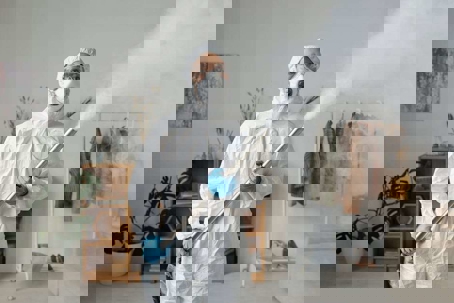
HEPA filters might just be the unsung heroes of indoor air quality. If you’ve ever wondered how to make the air in your home cleaner and safer, look no further. These filters are designed to remove at least 99.97% of particles as small as 0.3 micrometers from the air, including dust, pollen, and even some bacteria and viruses.
Key Points:
– Definition: HEPA stands for high efficiency particulate air.
– Purpose: Captures pollutants that can harm indoor air quality.
– Efficiency: Removes tiny particles, improving health and comfort.
Improving air quality isn’t just about comfort—it’s about health. Recent studies, like the one observing homes with wood-burning stoves, show that using HEPA filters can lead to better heart health due to cleaner air. So, whether you’re dealing with allergens or just want to breathe easier, understanding the capabilities of HEPA filters is essential.
I’m Al Fouz, and with decades of experience in the HVAC industry, I’ve seen how HEPA filters transform homes by boosting air quality and protecting health. At Abaco Air Experts, we help Jacksonville homeowners create healthier living spaces year-round. Let’s explore how HEPA filters can make a difference in your home.
What is a HEPA Filter?
A HEPA filter, or high efficiency particulate air filter, is a type of air filter designed to capture and remove at least 99.97% of particles as tiny as 0.3 microns. But what does that mean for your home’s air quality?
High Efficiency in Action
HEPA filters are renowned for their incredible filtration efficiency. They trap microscopic particles like dust, pollen, mold, bacteria, and even some viruses. These particles are often invisible to the naked eye, yet they can have a significant impact on your health.
To put it into perspective, a human hair is about 50 to 150 microns in diameter. HEPA filters can capture particles over 150 times smaller than the width of a single hair! This makes them an essential tool in improving indoor air quality.
The 0.3 Micron Challenge
Why focus on particles of 0.3 microns? This size is considered the most penetrating particle size (MPPS), meaning they are the hardest to capture. By targeting these challenging particles, HEPA filters ensure they can capture even smaller and larger particles with greater efficiency.
Filtration Efficiency Standards
HEPA filters must meet strict standards to earn their name. In the U.S., they must capture at least 99.97% of 0.3 micron particles, while in Europe, the requirement is 99.95%. This high level of efficiency makes HEPA filters a top choice for anyone serious about air quality.
Whether you’re dealing with allergens or just want to breathe cleaner air, HEPA filters are a powerful solution. Next, we’ll dive into how these filters work their magic, ensuring your home stays fresh and healthy.
How HEPA Filters Work
HEPA filters are designed to capture particles using a mix of three clever mechanisms: diffusion, interception, and impaction. Each plays a crucial role in ensuring these filters are incredibly effective at purifying the air.
Diffusion: The Tiny Particle Trap
Diffusion is all about capturing the tiniest particles, those below 0.1 microns. These small particles move erratically, similar to how dust dances in a sunbeam. This random movement, known as Brownian motion, causes them to collide with the fibers of the HEPA filter. The more they bounce around, the higher the chance they’ll get trapped. This method is most effective at lower airflow rates, making it a key player in the HEPA filter’s arsenal.
Interception: The Mid-Size Catch
Interception works best for mid-sized particles. As air flows through the filter, these particles follow the stream. When they come close to a filter fiber—within a particle’s radius—they stick to it. It’s like a game of tag where the particles can’t help but get caught. This mechanism efficiently captures particles that are too big to diffuse but too small for impaction.
Impaction: The Big Particle Barrier
Impaction is the method for capturing larger particles. These particles cannot easily follow the air’s curving path around the filter fibers. Instead, they crash straight into the fibers and stick. This process is more effective with higher airflow and tighter fiber spacing. It’s like a net catching a ball, stopping the larger particles in their tracks.
A Combined Effort for Particle Capture
Together, these methods ensure that HEPA filters capture a wide range of particle sizes effectively. Each mechanism targets different particle types, making HEPA filters versatile and reliable. They excel at removing dust, pollen, mold, and bacteria from the air, contributing to a healthier indoor environment.
Understanding these processes helps us appreciate the science behind HEPA filters and their role in keeping our air clean. Next, we’ll explore the many benefits of using HEPA filters in your home.
Benefits of Using HEPA Filters
HEPA filters are a powerhouse when it comes to improving indoor air quality. By capturing a wide range of pollutants, they help create a healthier living environment. Let’s explore some of the key benefits of using HEPA filters.
Tackling Allergens and Bacteria
HEPA filters are champions at removing common allergens like dust, pollen, and pet dander from the air. These tiny particles can trigger allergies and asthma symptoms. By filtering them out, HEPA filters can provide relief for allergy sufferers and improve overall respiratory health.
In addition to allergens, HEPA filters are effective at trapping bacteria. This is crucial for reducing the spread of germs and maintaining a cleaner, safer home environment. According to research, HEPA filters can even trap airborne particles that harbor viruses, including those similar in size to COVID-19.
Mold Control
Mold spores are another indoor air nuisance that HEPA filters can tackle. While they can’t eliminate mold growth at its source, HEPA filters can reduce the concentration of spores in the air, which helps mitigate allergic reactions and respiratory issues.
To further combat mold, some air purifiers combine HEPA filters with UV-C light technology. This combination can kill or inactivate mold spores, providing an extra layer of protection.
Cardiovascular Health
Improved air quality isn’t just about breathing easier; it can also have significant health benefits. A study found that using HEPA filters in homes reduced levels of airborne particulate matter, which can improve blood vessel health. The study, conducted in a community with high wood smoke pollution, showed that HEPA filters helped lower markers associated with cardiovascular disease.
A Breath of Fresh Air
By removing pollutants and allergens, HEPA filters contribute to a fresher, cleaner indoor atmosphere. This can lead to better sleep, improved focus, and an overall sense of well-being.
Incorporating HEPA filters into your home can make a noticeable difference in the air you breathe. But like all technologies, they have their limitations. Next, we’ll explore what HEPA filters can’t do and where they fall short.
Limitations of HEPA Filters
While HEPA filters are excellent at improving air quality, they aren’t perfect. Let’s explore some of their limitations.
Particle Size Limitations
HEPA filters excel at capturing particles as small as 0.3 microns, but they struggle with particles smaller than that. This includes very fine particles like some viruses and ultrafine dust. Although HEPA filters can capture some particles below 0.3 microns through diffusion, they aren’t foolproof. For particles smaller than 0.1 microns, the efficiency decreases.
Volatile Organic Compounds (VOCs)
HEPA filters are not designed to capture gases or odors. This includes volatile organic compounds (VOCs) like chemical vapors from paints or cleaning products. To tackle VOCs, you need an activated carbon filter, which can absorb these gases. This is crucial for maintaining a truly clean and healthy indoor environment.
Ozone Production
Unlike some air purifiers that use ozone to clean the air, HEPA filters do not produce ozone. This is a positive aspect, as ozone can be harmful to health. However, it’s worth noting that HEPA filters alone won’t remove ozone already present in the air. Again, a combination with carbon filters is necessary for this task.
Frequent Replacement
HEPA filters require regular replacement to maintain their efficiency. Over time, they become clogged with particles, reducing airflow and effectiveness. Regular maintenance is essential, but it can be costly and inconvenient. On top of that, disposing of used filters can have environmental impacts.
In summary, while HEPA filters are a powerful tool for cleaner air, they aren’t a one-size-fits-all solution. Understanding their limitations helps you make informed decisions about air purification solutions. Next, we’ll dig into the different grades and standards for HEPA filters, ensuring you choose the right one for your needs.
HEPA Filter Grades and Standards
When choosing a HEPA filter, understanding its grades and standards is crucial for ensuring optimal air purification. Let’s break down the key aspects: MERV ratings, ISO standards, and filtration efficiency.
MERV Ratings
Minimum Efficiency Reporting Values (MERV) are used to rate the effectiveness of air filters. The scale ranges from 1 to 16, with higher numbers indicating better filtration of larger particles. For instance, a filter with a MERV rating of 16 can capture over 95% of particles as small as 0.3 microns.
| MERV Rating | Particle Size (μm) | Efficiency (%) |
|---|---|---|
| 1-4 | 3.0 – 10.0 | < 20% |
| 6 | 3.0 – 10.0 | ~50% |
| 8 | 3.0 – 10.0 | ~85% |
| 10 | 1.0 – 3.0 | 50%-65% |
| 12 | 1.0 – 3.0 | 80%-90% |
| 14 | 0.3 – 1.0 | 75%-84% |
| 16 | 0.3 – 10.0 | ≥ 95% |
Higher MERV ratings mean better filtration but can also lead to reduced airflow. Therefore, it’s important to find a balance that fits your system’s capacity.
ISO Standards
The International Organization for Standardization (ISO) provides another way to classify HEPA filters. This system includes grades like E12, H13, and H14, indicating various levels of filtration efficiency:
- E12: Captures ≥ 99.5% of particles at the most penetrating particle size (MPPS).
- H13: Captures ≥ 99.95%, making it ideal for home purifiers.
- H14: Captures ≥ 99.995%, offering even higher protection, often used in medical settings.
Filtration Efficiency
HEPA filters are renowned for capturing at least 99.97% of particles as small as 0.3 microns. This includes dust, pollen, mold, and bacteria, making them highly effective for improving indoor air quality.
In a study conducted by Canadian researchers, the use of HEPA filters in homes significantly reduced airborne particulate matter, resulting in improved cardiovascular health for the participants .
Understanding these standards and ratings helps you choose the right HEPA filter for your needs, ensuring the best possible air quality in your home. Next, we’ll address some frequently asked questions about HEPA filters, shedding light on common concerns and misconceptions.
Frequently Asked Questions about HEPA Filters
What does a HEPA filter do?
A HEPA filter is designed to trap tiny particles in the air, making it a powerful tool for improving indoor air quality. It captures at least 99.97% of particles that are 0.3 microns in size, including dust, pollen, mold spores, and bacteria. This makes it highly effective for allergy sufferers and those looking to reduce airborne irritants in their homes.
Why are HEPA filters rarely used in homes?
While HEPA filters are excellent at removing particles, they have limitations. They don’t filter out harmful gases like volatile organic compounds (VOCs) or reduce air dryness. Additionally, some HEPA filters can produce ozone, a harmful gas, as a byproduct. Because of these factors, HEPA filters are often supplemented with other types of filtration systems, like activated carbon filters, to address these gaps.
What is the principle of a HEPA filter?
HEPA filters use three main mechanisms to capture particles:
Diffusion: This method is effective for the smallest particles. These tiny particles move erratically, similar to Brownian motion, and eventually collide with the filter fibers where they get trapped.
Interception: Mid-sized particles follow the air stream and are captured when they come within one radius of a filter fiber.
Impaction: Larger particles cannot avoid the fibers and are directly embedded into them as the air flows through the filter.
Each of these mechanisms works together to ensure the HEPA filter captures a wide range of particle sizes, making it a versatile choice for air purification.
Conclusion
At Abaco Air Experts, we understand the importance of clean air for a healthy home. That’s why we offer expert HVAC services, including air purifier setup, right here in Jacksonville, Florida. With our decades of experience since 1967, we are committed to providing dependable, 24/7 services to ensure your indoor environment is as comfortable and safe as possible.
Why Choose Us?
Expertise and Reliability: Our team is trained to handle all your air quality needs. From installing advanced air purifiers to maintaining your HVAC systems, we ensure the best solutions for your home.
Customized Solutions: We know every home is unique. Our services are custom to meet your specific needs, ensuring you get the most effective air purification setup.
Commitment to Quality: We only use high-quality equipment and the latest technology to ensure your indoor air is free from allergens, dust, and other pollutants.
Customer Satisfaction: Your comfort is our top priority. We strive to exceed your expectations with every service call.
For those looking to improve their home’s air quality, our HEPA filter installations could be the key to cleaner, healthier air. These filters are renowned for their ability to capture 99.97% of airborne particles, making them an essential component in any air purification system.
If you’re ready to take the next step towards a healthier home environment, contact us today. Let Abaco Air Experts help you breathe easier and live better.